

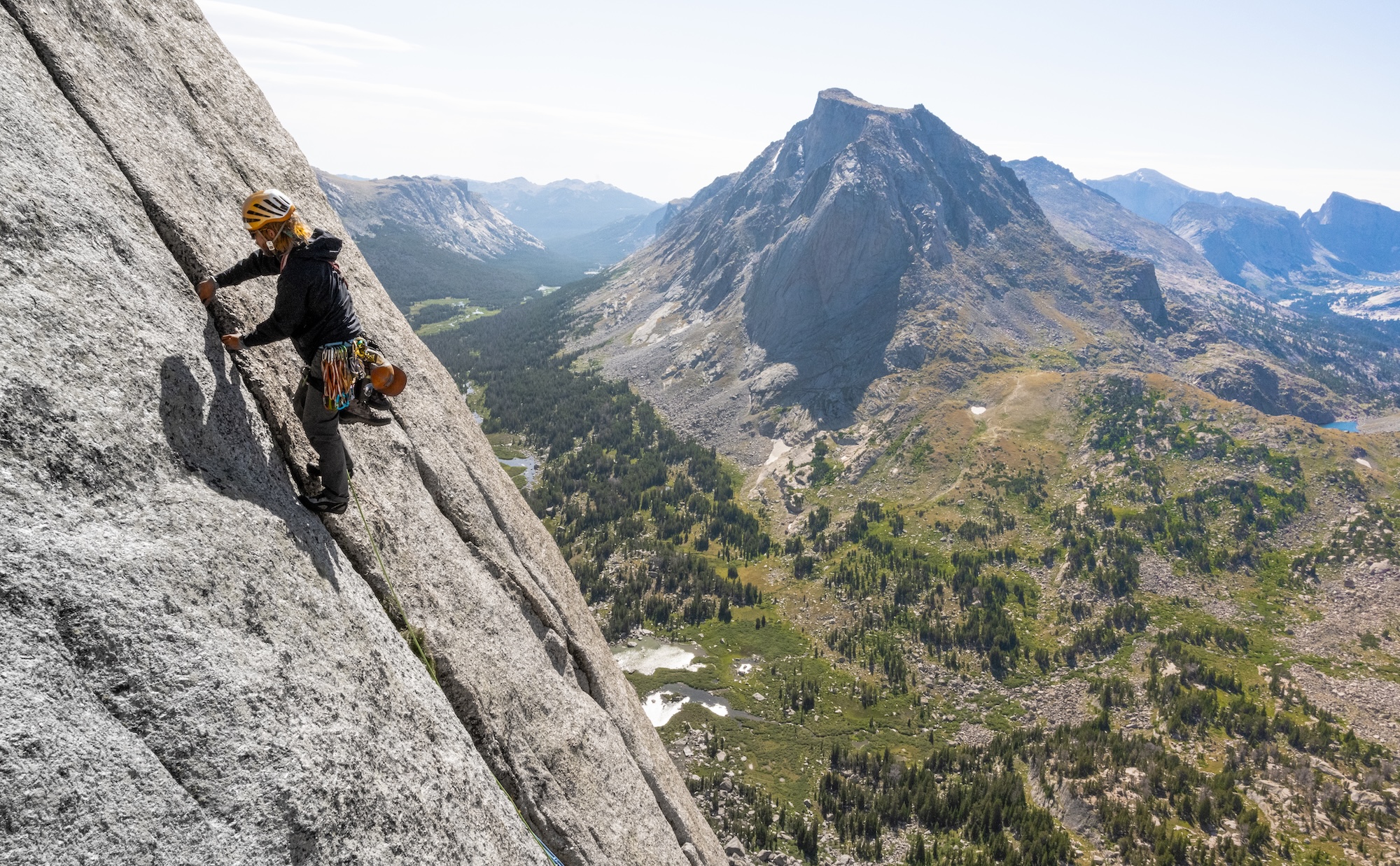
The U.S. Forest Service is preparing to publish the agency’s first national direction for managing recreational climbing opportunities on national forests and grasslands. The guidance – issued with input by the National Park Service (NPS), Bureau of Land Management (BLM), U.S. Fish and Wildlife Service (FWS), and U.S. Forest Service (USFS)—stands to shape how America’s climbing is managed for decades to come, said the Access Fund, the leading advocacy organization for sustainable access and conservation of climbing landscapes.
The proposal, which will include guidance for the use and maintenance of fixed anchors and equipment, is an updated proposal replacing a 2023 draft that was overtaken by new requirements in the Expanding Public Lands Outdoor Recreation Experiences (EXPLORE) Act, signed into law January 4, 2025. The EXPLORE Act directs federal land management agencies to recognize recreational climbing – including the placement and maintenance of fixed anchors – as an appropriate use in congressionally designated wilderness areas.
“Recreational climbing continues to grow in popularity, with nearly 30 percent of all outdoor climbing occurring on National Forest System lands,” said Forest Service Chief Tom Schultz. “This proposed directive provides much-needed national policy for climbing activities and gives local decision-makers the ability to work with partners, tribes, climbing organizations, and others to ensure visitors are having safe, responsible and accessible outdoor experiences.”
Nationally, it is estimated there are nearly 10.3 million climbers in the United States, of which approximately 2.3 million participated in sport or boulder climbing and approximately 2.4 million participated in traditional ice or mountaineering climbing, according to the Outdoor Industry Association’s 2022 report on outdoor participation trends.
According to Access Fund, the NPS, BLM, and FWS draft policies address only Wilderness climbing management, while the USFS draft policy applies to both Wilderness and non-Wilderness climbing areas—roughly 30% of America’s climbing. The four draft policies share the determination that fixed anchors are allowable in Wilderness but differ in technical elements.
“The draft guidance is an important course correction from the 2023 NPS and USFS proposals that would have restricted climbing access, created safety risks, erased historic climbing routes, and imposed costly management burdens,” said the advocacy group.
The climbing management guidance is required under the Protecting America’s Rock Climbing (PARC) Act, a bipartisan law passed in 2025 as part of the EXPLORE Act, the Access Fund explained. In addition to recognizing climbing activities and fixed anchors an appropriate use on federally designated wilderness, the PARC Act also allows climbing routes established before January 4, 2025, to be used and maintained in perpetuity—ensuring historic climbing areas such as El Capitan in Yosemite National Park, the Diamond in Rocky Mountain National Park, the Cirque of the Towers in the Wind River Range, and Rainbow Wall at Red Rock Canyon National Conservation Area remain accessible.
Before the guidance is finalized, NPS, BLM and FWS are required to accept public comments for 60-days, which opened June 15. The USFS guidance is open to public comments for 30-days, starting June 18. The proposed policy can be viewed and comments submitted through the Comment and Analysis Response Application.
Access Fund is asking the climbing and outdoor communities to come together to show strong and unified support by learning more, and submitting comments using its easy letter-writing tool at accessfund.org/take-action.
Access Fund supports the draft policies; however, it is recommending several essential technical revisions and clarifications, including consistent fixed-anchor definitions, and practical new climbing route management and fixed anchor maintenance.
“America’s public lands offer a wide range of exceptional climbing experiences. When climbing in Wilderness areas, climbers need to exercise restraint and low-impact practices to maintain the character of the land and ensure that future generations have the opportunity to experience these wild spaces.” said Heather Thorne, Executive Director of Access Fund. “The draft climbing management guidance can be improved, but the spirit of the policies protects America’s climbing legacy, and the spirit of adventure.”
Photo by Seth Anderson, courtesy of Access Fund.